What Not to Place in a Storage Unit
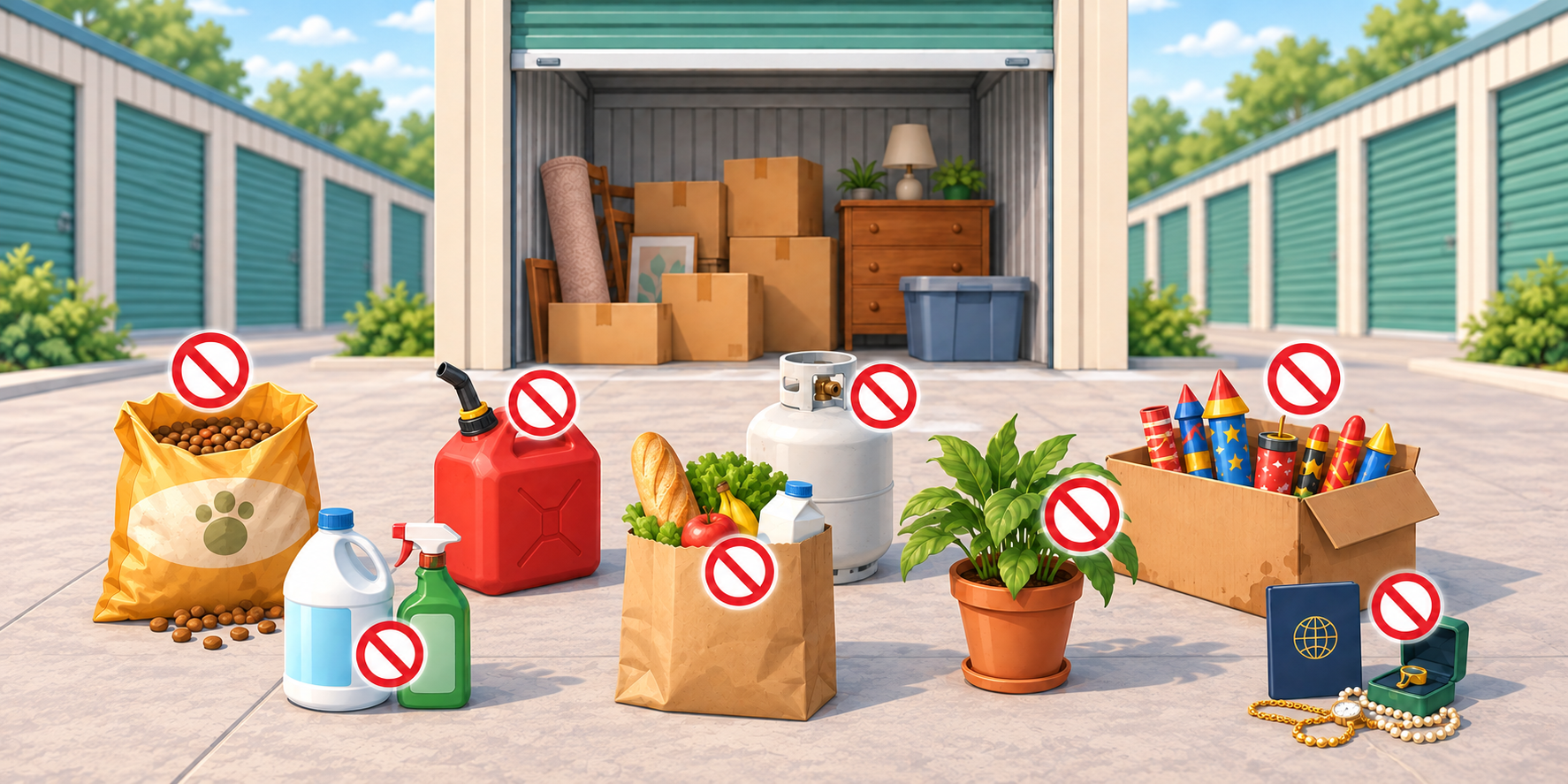
What Items Should Never Be Placed in a Storage Unit?
A storage unit is a convenient place to keep furniture, seasonal decorations, business inventory, and other belongings you do not currently need. However, some items can create safety risks, attract pests, damage nearby property, or violate your rental agreement.
Before packing your unit, make sure these items stay out.
Food and Perishable Items
Food can spoil, produce odors, and attract insects or rodents. Avoid storing:
- Fresh, frozen, or refrigerated food
- Pet food and birdseed
- Items stored in weak or unsealed containers
Some facilities may permit certain shelf-stable foods in sealed containers, but you should always check the facility’s rules first.
Flammable or Hazardous Materials
Hazardous materials can leak, ignite, or release dangerous fumes. These commonly include:
- Gasoline, propane, and kerosene
- Fireworks and explosives
- Paint thinner and certain solvents
- Fertilizers and pesticides
- Cleaning chemicals
- Pressurized or compressed-gas containers
Equipment such as lawnmowers, snow blowers, and other gas-powered tools should be drained of fuel before storage.
Illegal or Stolen Property
Illegal drugs, stolen goods, and other unlawfully obtained or prohibited items should never be placed in a storage unit. Tenants are responsible for ensuring everything they store is legal to possess.
Plants, Animals, and People
Living things cannot safely be kept inside a storage unit. Never use a unit to house:
- People
- Pets or other animals
- Indoor or outdoor plants
Storage units are not designed or legally approved as living or working spaces. They may lack appropriate ventilation, plumbing, emergency exits, and temperature control.
Wet or Damp Items
Moisture can lead to mold, mildew, odors, and permanent damage. Make sure furniture, clothing, appliances, outdoor equipment, and other belongings are completely clean and dry before placing them in storage.
Uninsured or Improperly Prepared Vehicles
Many facilities allow cars, motorcycles, boats, and recreational vehicles, but requirements vary. Vehicles may need to be registered, insured, operational, and free of fuel leaks. Ask the facility about its vehicle-storage rules before moving one onto the property.
Weapons and Ammunition
Rules for storing firearms, ammunition, and other weapons vary according to facility policy and applicable laws. Do not assume these items are permitted. Contact the facility and review your rental agreement before storing any type of weapon.
Irreplaceable or Extremely Valuable Items
Even when permitted, a storage unit may not be the best place for belongings that are difficult or impossible to replace, including:
- Cash
- Expensive jewelry
- Original legal documents
- Family photographs and heirlooms
- Passports and birth certificates
- Rare collectibles
- Sensitive digital or business records
Consider using a bank safe-deposit box, fire-resistant home safe, or another secure environment designed for valuable items.
Temperature-Sensitive Items
Standard storage units may experience changes in temperature and humidity. Medication, certain electronics, artwork, candles, musical instruments, and delicate collectibles could be damaged under these conditions. Climate-controlled storage may help protect some items, but it is important to confirm what the facility permits.
Review Your Rental Agreement
Every storage facility has its own policies, and prohibited items should be listed in your rental agreement. If you are unsure whether something can be stored, contact the facility before bringing it to your unit.
Following these guidelines protects your belongings, neighboring tenants, and the entire storage property.
Tips for Protecting Furniture While It Is in Storage
Learn how to protect furniture from scratches, moisture, dust, and other damage while it is in storage. These practical preparation and organization tips will help keep your furniture in good condition until you need it again.
Read articleWhy Enroll in Auto-Charge for Your Storage Unit?
Enrolling in auto-charge helps self-storage tenants avoid missed payments, late fees, and interruptions to account access. This quick post explains how automatic payments can make renting storage simpler, more convenient, and easier to manage.
Read articleBest Practices for Keeping Your Storage Unit Secure
Keeping your storage unit secure starts with simple steps like choosing a strong lock, protecting your access code, and checking on your belongings regularly. This blog shares practical tips to help tenants reduce risk, follow facility rules, and enjoy greater peace of mind while using self storage.
Read article